Table Of Content
The first phase of any design thinking project is getting to know your audience. Once again, it’s all about the users, so start by identifying and understanding their wants, needs, challenges, and delight moments. While it’s exciting to explore all the directions you can go with a project, that’s usually not realistic — you probably need definitive results within some time frame.
Where can you find ideas for design thinking solutions?
Design principles are crucial as they provide a foundation for creating compelling, organized, and impactful visuals. They guide how elements interact, ensuring consistency, proximity, and visual hierarchy, as highlighted in this video with Frank Spillers, CEO of Experience Dynamics. Unity helps guide the viewer's attention and ensures a consistent, integrated visual experience. The absence of unity can make a design feel disjointed or chaotic.
Stage 1: Empathize—Research Your Users' Needs
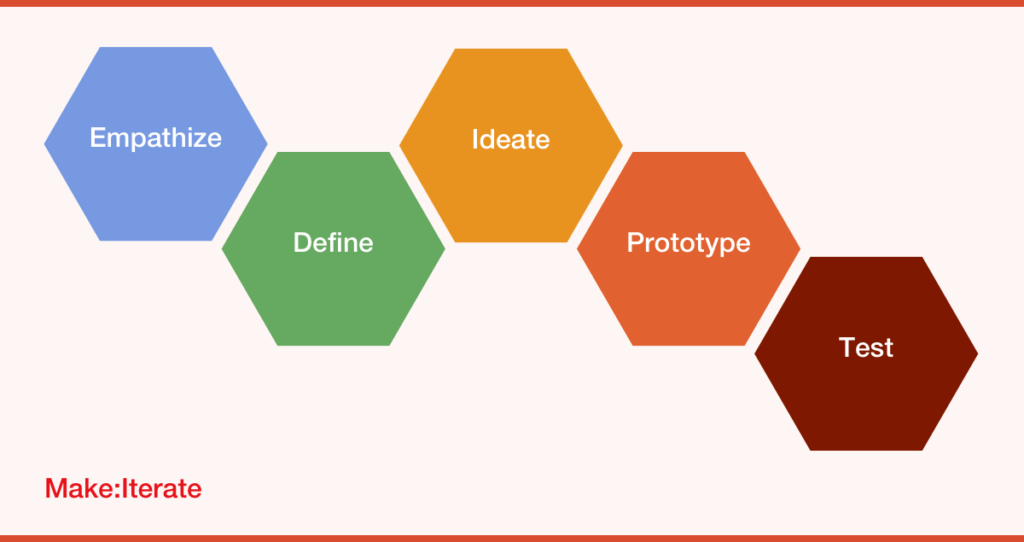
The new, chef-style uniforms gave the cooks a greater sense of pride. It was only part of the solution, but if the idea had been rejected outright, or perhaps not even suggested, the company would have missed an important aspect of the solution. Once you master the skills central to the design thinking approach, they can be applied to solve problems in daily life and any industry. Every process of design thinking goes through five stages. In today’s world of consumer goods, the term design is often connected with a product’s appearance and quality. As a principle though, design thinking tries to better peoples’ lives and promote wellbeing.But what exactly is design thinking and what are its principles?
Which program is right for you?
I had a great job, but they insisted that I figure out with them how to build a company. So, we hung out at Denny’s whenever they dropped by, which was, by the way, my alma mater, my first company. My first job before CEO was a dishwasher, and I did that very well. Gestalt refers to our tendency to perceive the sum of all parts as opposed to the individual elements. The human eye and brain perceive a unified shape in a different way to the way they perceive the individual parts of such shapes. In particular, we tend to perceive the overall shape of an object first, before perceiving the details (lines, textures, etc.) of the object.
As a process of designing
Balance in design principles refers to the distribution of visual weight within a composition. It ensures that elements are arranged in a way that doesn't make one side feel heavier than another. Color is not traditionally classified as a principle of design in art.
Process
It’s often necessary to do an exercise within a phase multiple times in order to arrive at the outcome needed to move forward. For example, in the define phase, different team members will have different backgrounds and expertise, and thus different approaches to problem identification. It’s common to spend an extended amount of time in the define phase, aligning a team to the same focus. Repetition is necessary if there are obstacles in establishing buy-in.
He Grew This SEO WordPress Plugin to 3,000,000+ Users
As you may have guessed by now, design thinking goes way beyond just the way something looks. And incorporating design thinking into your business is more than just creating a design studio and hiring designers. Design thinking means fundamentally changing how you develop your products, services, and, indeed, your organization itself. That means that design thinking is not only for designers but also for creative employees, freelancers, and business leaders. It is important to note the five stages of design thinking are not always sequential.
Scale describes the relative sizes of the elements in a design. By using scale to make an element larger than others appearing with it, you can emphasise that element. Not only can you make an element stand out this way—you can also use scale to create a sense of depth (since nearer objects appear larger to the human eye).
Make your users a priority
You’ll also learn about the types of grid systems and how to effectively use grids to improve your work. We can use colour, shape, contrast, scale, and/or positioning to achieve this. For instance, most websites have a main “hero” image, which uses dominance to appeal to users, drawing them to it naturally. The WWF logo, shown earlier, is an example of making use of the principle of gestalt to create interesting designs. By placing the parts of a panda near one another and strategically, the design makes use of our tendency to view the whole of an image rather than its parts, thereby creating an illusion of a panda. Unity has to do with creating a sense of harmony between all elements in a page.
White paper: Think Fast: Applying design thinking in enterprise - ITWeb
White paper: Think Fast: Applying design thinking in enterprise.
Posted: Thu, 11 Jan 2024 08:00:00 GMT [source]
And all of a sudden, you have to take a step back and ask yourself, “What is the implication in every single layer of everything that we do? ” So, I’m exercising in front of you, I’m reasoning in front of you, the same thing I did 15 years ago when I first saw Alex some 13, 14 years ago. We now have the ability through a lot of study and a lot of data and from patterns in relationships, we now understand what they mean. Not only do we understand what they mean, we can translate between them because we learned about the meaning of these things in the same world; we didn’t learn about them separately.
During the third stage of the design thinking process, designers are ready to generate ideas. You’ve grown to understand your users and their needs in the Empathize stage, and you’ve analyzed your observations in the Define stage to create a user centric problem statement. With this solid background, you and your team members can start to look at the problem from different perspectives and ideate innovative solutions to your problem statement.